miércoles, 23 de junio de 2010

ZAMINAMINA

 The news has spread like wildfire, especially on the web. Shakira plagiarized Wilfrido Vargas´song sung by the "Girls of Can" of Dominican Republican in the eighties called "The black man cannot", but known as Zaminamina.

The song, which is nothing less than the World Cup´anthem at of South Africa and it has become next to "Wave Your Flag" K`naan, in the most played tunes in almost every country in the world. Although Africans are more identified with the song of K`nan, even though this is Coca Cola promotion, because it is interpreted by the African Somali origin who always sings to his African roots, but he lives since thirteen in Canada.

Waka waka, as is known the song that plays Shakira, is not a creation of the Colombian performer and composer, but neither it is original performed by Wilfrido Vargas or the "Girls of Can ". It is a traditional African song, sung in Fang language, a variant of the Bantu. This language is spoken in part of Equatorial Guinea, South Gabon, Cameroon, Republic of the Congo and the islands of Sao Tome and Principe. In total the Fang language is spoken by a million people so waka waka sounds like a tongue twister for most Africans , more than 1.2 billion people who speak a language other than Fang.

Waka Waka is an action you or your but its conceptual translation Fang language would be something like you can. As always beckon twister, maybe this song is always so tacky. The letter in its original language is as follows:

Zamina mine hé hé
Waka Waka he he
Zamina ou mine
Zangalewa
Anawam ha ha

On the meaning in english some have posted the following:

"It does not hurt the coup, there is no fear, take off the dust, stand up and go back into the ring"

Totally made up. The true but not literal translation is:

Come ye eh eh
You do it he he
Who sent you?
Who called you?
Yes, is me

The song is definitely not original but neither is Shakira nor Wilfrido Vargas and can girls as we have said. It's a song generally used in the army of Cameroon, but also by the Boy Scouts in this central African country. Although it is traditional, made famous by a band called the Golden Sounds in the eighties, and became so famous that they changed the name of the band to Waka waka .

The original song has another part that does not appear in the version of Shakira but if the can girls of the eighties :

Yango hé hé
Yango hé hé
Zamina ou mine
Zangalewa
Anawam ha ha
It translates as follows:

I hoped I
I hoped I
Who sent you ?
Who called you ?
Yes, Is me
This song has been recorded by no less than ten bands.

DIAMONDS ARE FOREVER


From 6000 years ago were known and recovers the diamonds at Ban Rivers. Until the early nineteenth century it was considered that it was only possible to get them in commercial quantities in India and Brazil. But this changed dramatically in 1866 when a peasant named Erasmus Jacobs found a white stone on the bank of Orange River near Hopetown in South Africa. It was a diamond of 4.25 grams. Five years later he was found a similar stone on a hill called Colesberg Kopje near the first finding with the difference that was four times larger: 16.7 grams or 83.5 carats. This second finding determined the start of the call South African diamond fever.

Thousands of miners arrived as a marabunta to make the hill disappear by the effort of their muscles. But they didn’t stop, they continued to diamond digging and pulling up into a hole of 400 meters wide and 1097 meters deep. In 1914 when the mine closed, they had hand moved twenty tons of earth.

It is the deepest hole made by human hands. They only used picks, shovels, muscles and the greed of more than fifty thousand white adventurers from Europe mostly in search of diamonds to get rich suddenly.

The city was renamed Kimberly in honor of foreign minister of England in 1873 John Wodehouse, First Earl of Kimberley.

The term diamond comes from Greek and means unchanging, unbreakable. The Greeks knew from 3,000 years ago. They came from India where they were collected from the rivers Penner, Krishna and Godavari. In India were used as religious icons and a engraving tools for its hardness.

Humphry Davy was a British chemist, in 1813 found that the diamond is not nothing but cooked carbon at high pressure between 45-60 kilo bars and high temperatures of 900-1300 Celsius degrees. They are very special conditions that are only found in the mantle of the lithosphere and the place where a meteorite falls

Since its inception was a company owned and Cecil Rhodes who raised an empire by slave labor of Africans who never seized the benefits of diamond production. Rhodes´ company, De Beers still controls the diamonds market today and is the one that popularized the slogan "Diamonds are forever", declared the slogan of the twentieth century. Currently the company is controlled by the Oppenheimer family.

De Beers has been widely criticized for continuing for more than a century a policy that gives priority to increase their wealth over the people. They are accused of forcing the bushmen, those peaceful people of the Kalahari out of their ancient territory, to facilitate the company´s extraction and appropriation of diamonds from their territories. They are also accused of promoting the so-called blood diamonds encouraging coups and military uprisings to control diamond-mining centers .
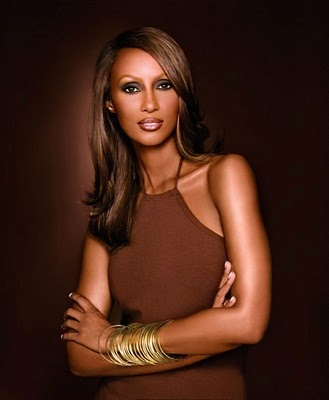
Some famous English models such as Erin O'Connor and Lily Cole and supermodel Somali Iman Mohamed Abdulmajid have publicly renounced advertising campaigns for this company De Beers.

lunes, 14 de junio de 2010

SOUTH AFRICA: FIRST HEART TRANSPLANT


By: Felipe Argote

Cape Town, South Africa. December 3, 1967. Denise Darvall, a 25 year old girl dies in a car accident. Nearby, Wshkansky Louise, a 53 year old white man was lying on a bed of the Groote Schuur hospital, terminally ill with a heart beyond repair, added to acute diabetes. At that time Dr. Christian Barnard, born in South Africa and graduated from the University of Cape Town in 1953, give him the news he had got a heart with the necessary conditions for transplantation. His assistant was Hamilton Naki, a black man who was hired as a gardener, but little by little for his great skill has become imperative for the surgeon assistant

The long operation was a success and became the first heart transplant of a human being. The patient said he felt much better with the heart of the girl Denise Darvall. Unfortunately the patient died 18 days later of pneumonia.

A month later, on January 2, 1968, underwent the second operation to transplant a healthy heart in the body of a terminally ill patient. This time the heart belonged to Clive Haupt, a black man who died in an accident. The recipient was Phillip Blaiberg, a white man. This time the patient spent over a year and a half with the heart implanted. It happened in South Africa in the middle of the racist policy of apartheid. Hamilton Naki would say many years later that if he were out in the photo that traveled the world with news of the success of the transplant he had been put in jail.

So it was in South Africa where was performed the first heart transplant in history and developed a white man and a black one. Both placed the heart of a black man in a white body and this survived.

Bernard married several times. His first wife was Louwtjie had two children: Dirdre and Andre. Andre committed suicide because his parents' divorce. He then married Barbara Zoellner of nineteen in 1984, when Barnard had turned 62. She left him a couple of years later to marry a Portuguese businessman. Barnard later married Evelyn Entleder 24 years when he passed 65. She left him too. Finally Karen married 24 years Setzkorn and had two daughters Armin and Lara. He gave birth to Lara at seventy-four years old.

Hamilton Naki, the black assistant to Bernard in the Groote Schuur hospital was for the official records of the hospital a gardener. Naki not only contributed directly to the transplant operations, he held the position of laboratory technician researched kidney transplants, heart and liver, by special permission, while his formal position was still a gardener. He trained a large number of young surgeons for over forty years. But his salary and position in the organizational chart was a gardener and that he received his retirement pay $286 a month.

Naki was born in 1926 in the Transkei, never finished elementary school, was one of the greatest surgeons in the world but always had to work anonymously with the complicity of the authorities of the hospital but was never paid fair. Those were the days of apartheid.

At the drop of the apartheid the whole truth was known. Hamilton retired in 1991 at the age of 65 years, then changed his truck to a mobile clinic where he served for free to the poor. In 2001 he was finally recognized its merits, after ten years of having retired with a salary of a gardener. During the act of recognizing the surgeon Christian Bernard testified that he was Naki who removed the heart of Denise Darvall, the night of December 3, 1967 with the launch of the first successful experience of heart transplantation. Technically, Haki was better than me said Christian Barnard

In 2003 he was given an honorary degree of doctor of medicine at the University of Cape Town and the National Order of Mapungubwe in Bronze. He lived in a shack without running water or electricity.

Christian Barnard died that year at the age of 82. Hamilton Naki died on May 29, 2005 at the age of 79.

sábado, 12 de junio de 2010

MADIBA

By: Felipe Argote

Was born in a small village of 300 inhabitants called Qunu in Xhosa in the Transkei, which means "beyond the river" on June 18, 1918. Spent 27 years imprisoned by the racist regime that instituted apartheid in South Africa. But they never broke his spirit even though they offered freedom more than once in exchange for agreeing to withdraw into a Bantustan, a segregated area for blacks to live away from inhabited by whites.

He said that only come out of prison as a free man. In fact, in 1990 he came out after an agreement with then-President Frederick De Clerk to dismantle the racist regime. In 1994 he was the first president of the Republic of South Africa without apartheid.

Mandela graduated as lawyer in 1942. Two years later began his activism in the African National Congress, a peace movement that fought against the oppression of blacks. He was 24 years old. He quickly became one of the leaders of the youth league of the ANC. In 1952 he was the leader of youth when civil disobedience campaigns began. That same year he became the president of the ANC branch in the Transvaal at the very moment that deepened the repression against the black movement, with the arrest of 8,000 people, including Nelson Mandela. He was sentenced to remain confined for three years in Johannesburg banned to mobilize from anywhere in the country. In Johannesburg, Mandela opened the first black law firm in South Africa.

In 1955 he served his sentence and immediately starts a new campaign: The Freedom Charter. It was a document that promoted racial desegregation and freedom for blacks, as well as land reform and a fair distribution of wealth.

In 1960, the Sharpeville massacre happened. Police fired on a peaceful demonstration protesting against apartheid. They killed 69, including men, women and children. Mandela was imprisoned without trial and accused of treason, but was released in 1961. This killing marks a historical variant. From this slaughter fraction Mandela heads the ANC which is decided by the armed struggle they convinced that peaceful dialogue was useless for the racist regime. They organized "the spear of the nation," the armed wing of the "National Action Congress of All Africa" which he was the honorary secretary. In those days did not allow blacks people to the vote, it was prohibited interracial marriage, interracial parties were prohibited and the residence of blacks in white areas, among many other absurd measures.

In 1962 Mandela leaves the country for military training in other African countries where there were armed movements. Upon his return he was arrested and sentenced first to five years in prison and then to life imprisonment. In prison, he becomes the symbol of the struggle for freedom of the broad majority of South Africans men and women.

He was imprisoned until 1990 when he agrees with President Frederick De Clerk for the democratization process after the departure of Pieter Willem Botha, who suffered a stroke while enjoying the mandate.

With De Clerk he established the timetable for democratization. In 1994 Mandela was the first president of democratic South Africa and De Clerk his vice president. They then shared the Nobel Peace Prize in 1993. Despite the insistence to be reelected from many politicians who considered him the guarantor of stability, he refused to re-election in 1999 when his term ended.

Nelson Mandela has been married three times and had three daughters and three sons. In 1944 he married Evelyn Ntoko at the age of 26 years. With her he had a daughter who died at the age of infancy and three sons, Madibi who died in a car accident in 1969 and Makgatho who died of AIDS in 2005. At thirteen years of his first marriage he divorce from Evelyn. Then he married Winnie Madikizela in 1957 and they had two daughters Zenani and Zindziswa in 1958 and 1960 respectively while incarcerated. Winnie is undoubtedly the best known because she was high leader of the ANC. From Winnie Mandela he divorced in 1996, two years after being separated after a scandal involving Winnie and his bodyguard in the death of young blacks.

Finally he married Graca Machel in 1998. He was 80 years. Graca is the daughter of Samora Moises Machel, the historic leader of the Front for Liberation of Mozambique, FRELIMO, who won his country's decolonization and was its first president, and who was killed as is believed by an operation jointly developed by Pier Botha then president of South Africa and the Soviet ambassador in Mozambique, when the Soviet Union considered that Machel, who established a pro-Russian regime, was getting out of hand.

TOXIC ASSETS

By: Felipe Argote

The euphemism the specialists current linked to Austrian economics and finance, often uses to cover the actual terms are so discredited that sound bad no matter the language. If you read in a publication about bad debts and junk investments the reader will know it refers to properties with little chance of becoming liquid at book value.

So the ultra conservative trend experts coined the term toxic assets as verbal paint tried revamping the thousands of millions of dollars locked in properties that are now well below book value, explode like a balloon after the housing bubble that they created.

In September 1988 while in the presidency of George Bush exploded the last U.S. financial system crisis. The reason is none other than the minimal state supervision in financial transactions as a cornerstone of the neoliberal model, which made the merchants bank loans mortgage borrowers unable to pay.

The system was not all that complicated. It offered you established a payment mortgages to purchase homes beyond the payment capacity of cancellations by customers who were not the same throughout the course of the credit. For example, they offer you to pay a relatively low monthly payment the first five years and then a monthly increase for the fifth year, and then another increase from the tenth, arguing that even though today you can not pay the monthly, you would pay in the fifth and tenth. They assumed that the growth of the economy and growth in the debtor's income would have capacity to pay when they appropriate the increase. Of course, the fifth year, many could not afford the enhancement in the installment and lost their homes. Million borrowers became homeless.

Some commented that such sales unsuspecting high risk are not suitable for banks and is therefore suspect that they placed the noose around their own neck. Nope. The bank in turn sells the receivables in the form of bonds. The buyer at that time would have no apprehensions of getting the bonus because almost by definition is considered the safest investments are those backed by mortgages. So the banks sell the debt and recover the gain.

Of course, this end in a kind of Ponzi scheme in our area better known as a variety of pyramid.

The situation in September 2008, could not be scheduled less than frightening. The fall of Lehman Brothers puts the American economy to the edge with immediate effect in England first and then the rest of the developed world. Lehman Brothers is a financial giant created in 1844 by an immigrant from Bavaria, Germany. He called the company with his name H. Lehman but then with the inclusion of their children Emanuel and Mayer was named Lehman Brothers.

Then fell in line mortgage companies The Federal National Mortgage Association, popularly known as Fannie Mae and the Federal Home Loan Mortgage Corporation, better known as Freddie Mac, and later the insurer AIG American International Group, Inc. (AIG). This one is the largest U.S. insurer.

It stuck in waist-crisis discussion of neoliberal conservatives was how the state should intervene to avert catastrophe. Here are again the toxic assets. It was proposed that the government, with taxpayers' money acquire the bank devalued properties. Their Republican political and theoretical training not even allowed to see the possibility of nationalizing these companies, the state with a share in the private sector was a sacrilege. But although it is not part of the manual, they wanted the government to get rid of their toxic assets buying them at their book value. Faced with this dilemma no one decides to take the step and the crisis got worse day by day. This was in the midst of the American elections. Even the Republican candidate John McCain stops his campaign and went to Washington to participate in the discussion of the crisis.

At the end it was England and Prime Minister Gordon Brown who decided to nationalize the failing firms instead of buying their toxic assets. United States imitated and took up to 80% of AIG making it a state enterprise. Nobody would have suspected three years before that a fundamentalist neoliberal government would take measures like these more like a Keynesian model to that of Hayek and his followers. The new Barack Obama administration acquires General Motors to buy 80% of its shares. Then buy lots of shares of companies as important as Citigroup, Chrysler, GMAC and others. The toxic assets are still there, but companies and dignitaries enjoyed a strong economic boost from the taxpayer, through the socialization of the losses of their companies

miércoles, 2 de junio de 2010

PLES THE LADY AND TAUNG THE CHILD

By: Felipe Argote


In times of the beginning of the World Cup, two residents of Johannes burg, South Africa for sure will attend the appointment to show up for the thousands of fans and athletes that will visit their country. They are Mrs Ples and the Taung child. Of course they should be very excited as they were millions of years waiting for a chance to showcase their country.

Mrs Ples is between 2.8 and three million years. This is the most complete skull found so far of Australopithecus africanus. It was discovered in the province of Gauteng, formerly known as Transvaal, in the Sterkfontein area, northeast of Johannesburg. Australupitecus comes from the Latin australis, southern, and Greek pithekos, monkey. The size of his brain was similar to today's so-called Great Apes, but the particular is that they are the first monkeys to move bipedal, which leads them to regard as a phase of pre-evolution of humans. It was discovered in 1947 by Dr Robert Broom, a Scotch who settled for life in South Africa. The name of Mrs Ples have given it first arises from the scientific designation of Plesiantropus transvaalensis or almost human of Transvaal

The Taung child is popularly known as an infant skull 2.3 million years found in Taung, South Africa north of Johannesburg on 1924. His teeth are milk and final teeth were emerging. It is believed that at the time of his death had the age of 3 years. Their discovery is assigned to Raynond Dart, a professor of neuroanatomy at the University of Johannesburg. Their finding gives rise to the modern science of paleontology. In principle, the scientific community refused to consider the discovery of Dart like a hominid close relative of humans. For its racist conception the scientist could not accept that humans emerge from Africa and thus placed the Taung child as an ancestor of chimpanzees. But the weight of the evidence of this and subsequent findings could not only confirm that humanity emerged from this continent. Unlike chimpanzees the bony ridge over the eyes of the Taung child is not separated from the front by a groove, and the canine teeth are much smaller. This puts it in the family of hominids or great apes in which humans are.

The racist British society, was so absorbed in their esteem low, they created one of the biggest fraud in the history of paleontology to support that early humans had emerged in England. Upon discovery of the Taung child in South Africa as the ancestor of humans it was the thesis generally accepted by the scientific community that the link between apes and humans was found in 1908 in Piltdown, England, by Charles Dawson, an amateur archaeologist and Smith Woodward, a famous paleontologist born in Cheshire, England. Woodward was secretary of the Paleontological Society and president of the Geological Society of London. He had been awarded the Royal Medal of the Royal Society, Lyell Medal and the Wollaston Medal of the Geological Society, the Linnean Medal of the Linnean Society and the Clarke Medal of the Royal Society of New South Wales.

According to Dawson and Woodward they had found a skull, a tooth and jaw in Sussex in southern England in 1908. In 1953, forty-five years later, a dentist named A. T. Marson has ruled nothing less than the remains had been chemically treated to give the same pitch and the tooth was from a monkey, the skull was of a modern human and the jaw of a chimpanzee.

The respected members of the British scientific society with supine ignorance could not accept what we now take for granted: The first humans emerged in southern Africa.

The broad area where the fossils were located call Mrs Ples and the Taung child is in what has been declared the birthplace of humanity by UNESCO in the world heritage area that includes the Sterkfontein Caves and Wonder Cave and others where have found remains of at least 700 hominids. These hominids are the same group as the Australopithecus afererensis found in Ethiopia in 1974 in the area of the Afar tribe of which the most famous is Lucy, the most complete skeleton of an Australopithecus to confirm his walk erect. They are the ancestors of Homo habilis, whose remains are found primarily in Tanzania, Kenya and Ethiopia.

BIG RIVER


By: Felipe Argote


At eight grade of school I had the joy and sadness to read Mark Twin´s The Adventures of Tom Sawyer. I was delighted to discover that reading was a world that would give me great satisfaction in life, and gave me joys that I never imagined, but at the same time sadness because I discovered I had lost several years of my life thinking that reading was a torturous punishment to which teachers forced me in an effort to make me the most miserable guy in the world. I already had bad experiences when reading novels unbearable for my age as Platero and me, and others which teachers forced me to memorize characters and events but not to analyze, neither enjoy their content.

So when I read Mark Twin and the Adventures of Tom Sawyer, and then The Adventures of Huckleberry Finn started my interest in reading that I kept until today.

Because of this I was so interesting to watch Rio Grande, the musical, at Teatro en Círculo, an adaptation of Mark Twin's novel Adventures of Huckleberry Finn. Originally performed by Roger Miller and William Haupt, winner of seven Tony Awards, has been held in Panama under the production of Alida Gerbaud, under the direction of the prizewinner Bruce Quinn, with musical direction by Dino Nugent, and choreography by Barbara Berger at the Theatre in Circle. It was like to reconnect with the old heroes of The Adventures of Tom Sawyer and many of his characters. I went back I ran into Tom and his great friend, the tramp Huckleberry Finn, with the slave Jim, the Widow Douglas and Judge Thatcher.

This staging of Bruce Quinn, Dino Nugent, and Barbara Berger surprised me greatly as the height at which the theater has been raised in Panama, especially musicals.

Best of the work without a doubt are the voices, with special mention to the singers Odette Versailles and Yaritza Maga soloists who make the scene in "The Crossing" in which a boat slip where the slaves chained return were caught after trying to escape. Very good was also the musical participation of Daniel Gallimore who plays the slave Jim in particular in the interpretation of "Free at Last". About the actions we should mention the prominent role of Arturo Montenegro Ludwik Tapia and who are presented as King and Duke, a pair of con men on the way that give the play a touch of Boudeville especially in the scene "The Royal Nonesuch."

The musical accompaniment of Dino Nugent is undoubtedly a high level. Accompanied by nine musicians clearly develops the scores that show a reflection of the elevation of the interpretative quality of our environment. The days in which we were happy with very little in theater are gone. This has been understood by producers and directors but also because they have greater professionalism of the actors, musicians, dancers and singers. Barbara Berger's choreography is a special demonstration of the high level of training and experience that accompanies her resume. The dances are simple but good quality interpretation, supported by the Academy of Dance Steps.

Definitely I can only recommend attendance to see Big River to both theater enthusiasts and those who like music, because it has a good level with only short slurred speech of the main protagonist and overacting in the interpretation of the character of Tom Sawyer.

Rio Grande: The Adventures of Huckleberry Finn, produced by Alida Gerbaud Fábregas keeps coming back until mid June at the Circle Theatre.

domingo, 23 de mayo de 2010

BASIC BASKET: THE SALADINO´S LEAP

By: Felipe Argote


To analyze economic indicators is like painting a cloth. With the same palette and brush even using the same colors can result in art or motivate loathing.

If we read the numbers of the Ministry of Economy and Finance in its last publication that includes February and March this year, we see that the basic food basket was B/272.30, just 0.91 more than the previous month. According to analysts of the MEF, whose figures are official, however this amount is less than the same B/0.95 March last year. The ACODECO, meanwhile, has submitted a report stating that the basic food basket has declined further in April, causing the anger of the majority of the population, which has the feeling that your money every time buy less.

About ACODECO analysis I will say no comments, because it doesn’t have any scientific rigor.

To understand the position of the majority that feels that there is a diminished quality of life, we must briefly explain how we analyze the basic food basket.

The basic family basket is the price paid to cover the basic needs for an average family in Panama. This is 3.8 members. So a family of five members who told only needs B/272.3 to feed in a month gets angry every time they watch a public bureaucrat on television trying to make him understand that what he says true. If the family is five members, always following the numbers of MEF, would need B/358.29, if seven would need B/501.61.

To establish this basket, they have to calculate the caloric needs of people each day, multiply by seven (days), then by 52 (weeks) and then divided by twelve to see the monthly requirement of calories. Finally multiply by the average (3.8 people). Then, these needs are filled with the proportions of meat (15.84%), cereals (47.8%), vegetables and vegetables (4.33%), legumes (2.38%), fruits (1.67%), fat (10.58%), milk (5.75%) , eggs (0.79%), sugar (6.89%) and miscellaneous (4.71%). To this is added the cost of gas for cooking (B/0.37 per day per person)

Of course, to cover the item could take hock or beef steak, if we take one or the other very different prices. Or we could take within the potato product, the price of a five-pound bag of potatoes at Price-Smart or in another supermarket as Extra or super 99 to develop our average. In one bag may be more expensive, but the potatoes are better and his weight advantage, while another may be cheaper per pound, but each bag will have a rotten potato, so even when cheaper, to match the nutritional volume of the first would have to pay for a pound and a quarter. But for statistical purposes as if the pound takes the whole bag to be good.

Then a monthly variation is not very sensitive to the consumer unless the jump in prices is like to compete with those of Saladino. If there was a significant increase last year and the previous one, if this year is a small decrease in price, consumers should not be satisfied when the expectation was to return to the levels of two years ago and even below.

Consider the trend. The basket as we know it was organized in 2002. At that time cost B/187.30. If it is currently in B/272.30, that means an increase of 45.38%. Some optimists say that it happened during eight years. Right, but there was a stepwise increase. Only in early 2008 the cost of the basket was B/239.05. That means that in six years it rose 27.63%. (4.6% annually). In January last year had risen to B/270.60. This is an increase of 13% over the previous year. In February of that same year was raised to B/272.3 and B/273.25 and March, 14% compared to January 2008. In January this year had dropped to B/271.00. Then if in March of this year 2010 the basic basket is B/272.3 means B/1.30 has been raised regarding the beginning of the year. It is naive to think that people will believe the myth that the basket has declined because in March last year was in B/273.35.

It's like being put under a temperature of 90 degrees, then you raise the thermostat to 100 degrees Fahrenheit, then you raise it again at 120 degrees. When you are about to suffocate you go down to 119.5 degrees and pretend to smile with the argument that the heat has diminished.

THE TRIBE OF BLOND INDIANS OF DARIEN

By: Felipe Argote


When the American adventurer Richard O. Marsh traveled to the Darien jungle in the early twentieth century sponsored by the Smithsonian, the museum of natural history at the University of Rochester and the U.S. Army military intelligence never thought he was going to be face to face in the middle of the jungle white skin, blond hair and blue eyes Indians. When he returned to New York with the unusual news that he had discovered an Indian blonde tribe he became the laughingstock of the media, especially the tabloids. Some have claimed that they were descendants of English pirates who had been stranded on the shores of the Atlantic and had survived for centuries lost in the jungle fending off the Indians and hiding from the Spanish made any attempt on their lives. Others argued that Marsh had been the victim of some psychotropic plants and had been seeing visions. Others, because his controversial personality, claim that the adventurer had invented the story in the midst of his desire for notoriety, stating that it was a lost colony of Vikings in Greenland.

But Richard O Marsh was not willing to go down in history as a liar. So after gathering enough resources sailed to Panama and then to Darien in search of evidence of the existence of the mythical blonds Indian tribe of Darien. The result of his trip was better than expected. In 1924 he returned to New York. This time he was not alone, three Indians with all the features of the Indians of Darien, but with great particularity... were blond, blue eyes and white skin. They were the living proof: blond Indians of Darien.

Contrary to what Marsh thought, white Indians of Darien are not a different race, are part of the Kuna that because of a special genetic evolution born albinos. At kuna Yala albinos are born at a rate of 1 per 144 births, with this being the highest proportion of births of albinos in the world. In the U.S., for example, there is one albino for every 17,000 inhabitants. They are called the children of the moon by the Kuna themselves, who according to tradition born blonde because their mother during pregnancy feels an irresistible attraction to see the moon, and because during the day while his weak eyes cannot see clearly, during moonlight are those with a more acute eyes.

But long before Marsh, as far ahead as 1699, Dr. Lionel Wafer, an English doctor and pirate in his book "A New Voyage and Description of the Isthmus of America" described the Indians of Darien and sets targets the proportion among the Kuna of one for every 200 inhabitants.

The three Kuna albino Marsh took to New York were being studied by different specialists, but it was the geneticist Dr. Reginald G. Harris of Cold Spring Harbor Laboratory in genetic research that after seeing the captive Indians were motivated to travel to Kuna Yala for further studies of this rare congenital anomaly. This description was developed by Dr Harris: "Their skin is that of white people among Europeans, with a sieve of bluish skin, nor is it their skin as pale of our people, but rather a milky white. They are as high as the other indians. His eyelids are closed and open into an oblong shape, working down at the ends, forming an arc or crescent shape of the tips down. From here and from seeing so clearly on a moonlit night they are called sons of the moon. They canno see very well in full sun as they close their eyes as if they were myopic, however night vision is pure, clear and alert. They do not care at all "

The Harris report cleared the doubts of the existence of a tribe of white Indians developed by adventurer Richard O Marsh. He, Marsh left the Kuna Yala area escorted by U.S. troops after trying to mount on a legitimate revolutionary kuna movement. This survey proclaimed the Tule Republic in 1925 due to pressure of the Panamanian government wanted to force them by law to convert to Christianity and forbid the use of their traditional clothing, their religion and any culture. Richard Marsh took advantage of the movement suggesting that it seek to be a protectorate of the United States. So after signing the peace agreement between the Kuna and the Panamanian government the adventurer Marsh left the area protected by the U.S. army to his country of origin.

jueves, 20 de mayo de 2010

THE GOKOMERE EMPIRE

By: Felipe Argote


In times of the World Cup in South Africa many, myself included, have been surprised and a lot more will be surprised to see the places as developed and as beautiful natural sites offering Africa.

The European arrogance which claims to have discovered America for example, where already lived 30,000 years before our ancestors, who claim to have discovered the Pacific Ocean when the history tells was chief Comagre who showed Vasco Nuñez de Balboa the way, who then came to the archipelago of pearls, murdering and pillaging the Indians tribes found in his way, just as the Portuguese, Dutchmen and Englishmen who came to South Africa have hidden to say about the vast region that civilizations existed for hundreds of years.

One was that of The Great Zimbabwe, located northeast of South Africa in the present Republic of Zimbabwe. This country before independence was called Rhodesia, the name of the English who controlled and squandered these lands as his private company, having at their disposal tens of thousands of black slaves and thousands of white workers brought from England with the delusion that these regions were the Biblical mines of King Solomon.

For centuries Europeans have argued that these colossal ruins of a stone without mortar could not have been built by blacks, and assurances that may have been built by the Phoenicians or the Arabs. Its ancient ignorance led them to decide that this was a city built for the mines of King Solomon.

The further development of archeology shows that the great Zimbabwe was the capital of the black empire Gokomere and reached its highest development in the fifteenth century. Its economic strength was based on the gold trade. Excavations have shown that Gokomeres traded with the Arabs and Chinese. The complex of stone indicates that the great Zimbabwe was a huge city with high economic activity of more than 10,000 stone walled enclosures with more than 10 meters high. One of the buildings left standing is the Great Wall that is believed was built around the twelfth century and had at least three access doors lintels. Also stand part of the Royal Palace, a huge stone building. There was found the bird called Zimbabwe, a sculpture carved in stone that now appears on the flag of the country. Also near the Great Zimbabwe, the caves adjacent to the capital of Gokomere civilization can be found cave paintings of over 35,000 years, while the first cave art developed in Europe was 5.000 years later. The Great Zimbabwe has been declared World Heritage by UNESCO. The empire stretched not only in the current Zimbabwean whose name was recovered after independence but included part of today's Mozambique.

It is believed that its decline in the seventeenth century was due to the depletion of gold and overexploitation of hunting and logging. When they had changed their activity from gold to the slave trade it was colonized by the Portuguese. Those who remained in the stampede formed the Mutapa kingdom in Mozambique. This was known by the English as Monomotapa. At this moment is when the idea that in this area were the mines of King Solomon began. This leads to a Netherlands company called East India to the foundation of the Cape Colony, the first European settlement that will lead the creation of South Africa. This argument was used by the company to convince the first European settlers to relocate to this area. It was false. There were no mines of King Solomon and the Great Zimbabwe gold was exhausted. Instead two hundred years after was discovered in South Africa, specifically in Johannesburg, the largest gold reserves on the planet. While searching north of Cape Town a dummy mines they were established, unknowingly, on the largest gold mines in the world.

Zimbabwe was colonized in the late nineteenth century by Cecil Rhodes who came to trade 90% of the world's diamonds. Rhodes colonized Zimbabwe enslaving the natives. He had his own private army of the British Society of South Africa, with which seized the land to blacks who enslaved, and encouraged the settlement of white farmers who mainly located in the area called Mashonaland.

One hundred years later, the descendants of the native black teas have expelled from Zimbabwe in a systematic way the white farmers, who say in their defense that these lands have been occupied by them for generations.

Between Zimbabwe and Mozambique is one of the wonders of the world, falls Mosi-oa-Toenja (the smoke that thunders), at Zambezi River, the largest water curtain in the world. It fell to 500 million liters of water per minute.

martes, 18 de mayo de 2010

THE FIGHT IS FIGHTING

By: Felipe Argote


Pedro Hoyos was the hated ruler of Penonomé and collector of tithes and first fruits of the church. According to the usual medieval law, church required all residents to hand over ten percent of their crop. But not only that, the abusers were snatched from the poor peasants calls firsts, the first fruits of the earth and the first offspring that their animals give birth. So while the Conservative government and the church were becoming richer, the farmers were becoming poorer. But it happened that an indian from Penonomé faced the collector Hoyos. So he decided to make him pay his daring to serve as a warning. Together with a group of buddies the deputy waited Victoriano to kill him with bad luck for him that Victorian was alerted by villagers, so he was ready to confront the ruler, settling the confrontation with the death of Pedro Hoyos.

On May 25, 1900 had started the civil war in Panama with the manifesto of Belisario Porras, a lawyer from Las Tablas, calling for equal democracy. Victoriano already had served nine years in prison for the death in self-defense of the collector Hoyos. He had read about military strategy and had gained the sympathy of prisoners and guards. Now as a free man Victoriano was presented May 25 at Valle de Anton with 500 men

No wonder that his indian condition caused the liberal bias of the generals, especially Emiliano Herrera and Miguel Antonio Noriega. He was assigned the task of carrying weapons and supplies. But on June 7, after the battle of the “old black woman” e received the rank of captain.

Later that month, the liberal forces controlled the entire department except the city of Panama. Under the command of General Emiliano Herrera liberals were just preparing an offensive to enter the city for three different points. Is in that moment when the U.S. consul is involvd. Through a messenger he tells General Herrera tha t if he destroy the city the U.S. troops will intervene. Frightened he decides to develop the offensive on July 25, 1900 by a single point: the Calidonia bridge with the disastrous defeat of the liberal versus conservative army shrapnel.

Victoriano, shrewd as wisw as he was, anticipating the defeat of the Liberals by pithing plan of Herrera, comes with most of its troops to the hill Trinidad. Conservatives soldiers seek to him to “El Cacao” where they found the buried weapons. Unable to find him tey burned all the crops of farmers who supported him, but also they rape all the women and kill all the men in their path. After the withdrawal of conservative troops, the people gather in assembly and vote to continue the war and named Victoriano Lorenzo their General.

This occurred on October 20, 1900. Their weapons consisted of seven rifles captured to conservatives soldiers. By January 1901 the native troops led by General Victoriano Lorenzo had headquarters in La Negrita and prepare the offensive to Penonomé. There liberal General Manuel Antonio Noriega presented accompanied by General Manuel Patiño. Victoriano was required to submit to him and recognize him as commander in chief. Victoriano did not answer immediately. He said he would consult with his generals. Following consultation informed him that they had decided unanimously to reject the offer of the eponymous general who is currently imprisoned in Paris. It was during this meeting that General Victoriano Lorenzo said his famous phrase: the fight is fighting when he told Noriega: I am informed and I have seen, General Noriega, that you are writing letters to the Governor of Cocle in Penonomé. That do not believe it right because the fight is fighting. If they catch they will shoot me to dead, however, you, who are white and friend of the Mayor, no nothing would happen. For this reason I can not accept this situation. "My memories of General Victoriano Lorenzo. Stories Lt. loudly. Colonel Juan José Quiroz Mendoza 1900-1902).

Already in February 1902 the Liberal troops controlled the country again with the exception of Panama City. But at that moment began the betrayal. Liberals and conservatives had come to an agreement under the auspices of the U.S. government, which placed the armistice as a condition for signing treaty of the construction of the canal known as Herran Hay Treaty. In November 1902, Eusebio A. Lucas and Caballero Morales on behalf of the Liberal Party in Panama signed the peace treaty in the American battleship Wisconsin. As they did signed the death warrant of General of the Indians, for whom the war rather than economic interests sharing was about the survival of his people.

For over sixty years, his memory was distorted by the consecutive governments: The reason is obvious. Both liberals and conservatives betrayed the general Victoriano Lorenzo. Eusebio A. Morales, a senior leader of the Liberal Party, who signed the peace treaty in Wisconsin, was responsible for Victoriano trick it out of the mountains and take him to the city of Panama in an alleged meeting to discuss peace and land delivery farmers. Instead he gave him to his conservative party enemies. A council of war drew to invent a hoax charges and sentenced to death Victoriano. The judgemens who cowardly murdered Victoriano was chaired by Esteban Huertas, later declared by both liberals and conservatives as hero of the fatherland. Finally the doctor born in Cartagena, Colombia, which ruled the death of Victoriano Lorenzo for alleged natural causes, was none other than Manuel Amador Guerrero, Panama's first president.

Before being executed on May 15, 1903 General Victoriano Lorenzo said:

"People, hear a public word: you know who says it. Victoriano Lorenzo dies ... I forgive you all ... I die like Jesus died ..." Quoted by Ramon H. Jurado. Desertores. Manfer, Inc. Panama, 1991.